Tulsi Extract (Holy Basil) – Concentrated Ayurvedic Adaptogen
Tulsi Extract (Holy Basil) – Concentrated Ayurvedic Adaptogen
Couldn't load pickup availability
Tulsi Extract – Concentrated Potency from the Sacred Herb of Ayurveda
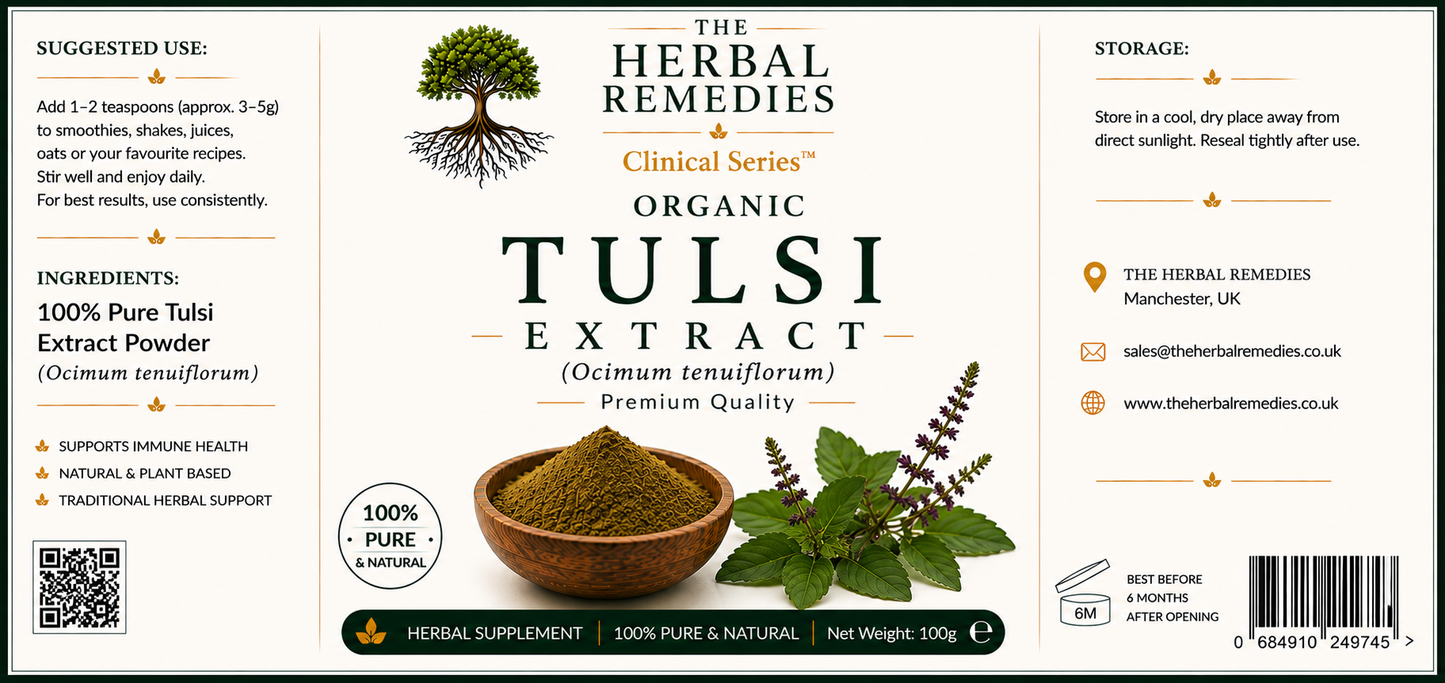
Tulsi Extract (Ocimum tenuiflorum) delivers the full therapeutic power of Holy Basil in a concentrated, bioavailable form. Unlike whole-leaf powder, this extract is standardised to preserve the highest possible concentration of key bioactive compounds — eugenol, rosmarinic acid, ursolic acid, and adaptogenic ocimumosides — making it the preferred choice for targeted wellness support. Revered for over 3,000 years in Ayurvedic medicine as a Rasayana (rejuvenative tonic), Tulsi is one of the most extensively researched adaptogenic herbs in integrative medicine today.
- Concentrated Tulsi (Ocimum tenuiflorum) extract
- Higher bioactive potency than standard leaf powder
- No fillers, binders or artificial additives
- Suitable for teas, decoctions, capsule blends & topical preparations
- 55g resealable pack
Key Compounds & Clinical Benefits
- Eugenol (Volatile Phenylpropanoid) — The principal active compound in Tulsi extract, eugenol inhibits cyclooxygenase (COX-1 and COX-2) enzymes — the same pathway targeted by NSAIDs — producing significant anti-inflammatory and analgesic effects. A study in the Journal of Ethnopharmacology (2007) confirmed eugenol's potent in vivo anti-inflammatory activity, supporting its use in managing chronic inflammation, joint discomfort, and pain.
- Ocimumosides A & B (Adaptogenic Glycosides) — These compounds are unique to Ocimum tenuiflorum and are the primary drivers of Tulsi's adaptogenic activity. A randomised, double-blind, placebo-controlled trial in the Journal of Ayurveda and Integrative Medicine (2012) demonstrated that Tulsi supplementation significantly reduced serum cortisol, improved cognitive flexibility, and enhanced stress resilience in healthy adults over 6 weeks — without adverse effects.
- Rosmarinic Acid (Polyphenolic Ester) — A potent antioxidant and anti-allergic compound shown to inhibit pro-inflammatory cytokines including IL-6, IL-1β, and TNF-α. Research in Phytotherapy Research (2014) highlighted rosmarinic acid's neuroprotective properties and its role in reducing neuroinflammation, supporting cognitive clarity and mental resilience.
- Ursolic Acid (Pentacyclic Triterpenoid) — Extensively studied for its immunomodulatory, hepatoprotective, and anti-tumour properties. A comprehensive review in Critical Reviews in Food Science and Nutrition (2013) confirmed ursolic acid's capacity to modulate NF-κB and STAT3 signalling — key regulators of immune response, inflammation, and cellular protection.
- Orientin & Vicenin (C-Glycosyl Flavonoids) — Potent free-radical scavengers that protect cellular DNA from oxidative damage. Studies published in Radiation Research demonstrated these flavonoids' radioprotective and cytoprotective properties, while broader research confirms their role in cardiovascular and immune health support.
- Carvacrol & β-Caryophyllene (Terpenes) — These volatile terpenes contribute to Tulsi's antimicrobial and bronchodilatory effects. Research in Frontiers in Microbiology (2016) confirmed carvacrol's broad-spectrum antimicrobial activity, supporting Tulsi's traditional use in respiratory infections, cough, and congestion.
- Vitamin C, Vitamin A & Zinc — Naturally occurring micronutrients in Tulsi that synergistically support immune function. Clinical evidence in Nutrients (2020) confirms Vitamin C and Zinc's combined role in reducing the duration and severity of upper respiratory tract infections.
Traditional Ayurvedic Applications
In classical Ayurveda, Tulsi is classified as Tridoshic — balancing Vata, Pitta, and Kapha — and is particularly indicated for Shwasa (respiratory disorders), Kasa (cough), Jwara (fever), and Manasika Roga (mental health). It is a cornerstone of Kadha (Ayurvedic decoctions) and Rasayana formulations for longevity and vitality.
How to Use
Add ¼–½ teaspoon (1–2g) to warm water, herbal tea, or warm milk and stir well. For respiratory support, combine with ginger and honey. For a traditional Kadha, simmer with black pepper and ginger in water for 10 minutes and sip warm. For topical use, mix with rose water or aloe vera gel and apply to affected skin areas. Consult a qualified Ayurvedic or integrative medicine practitioner for personalised therapeutic guidance.
This product is not intended to diagnose, treat, cure, or prevent any disease. Consult a healthcare professional before use if pregnant, breastfeeding, or taking medication.
Share