
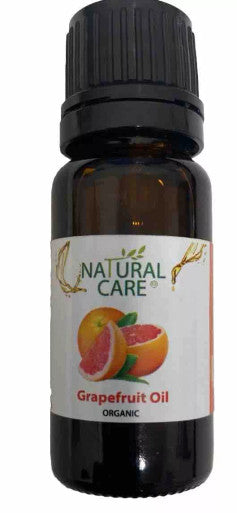
Organic Grapefruit Essential Oil — Cold-Pressed | Clinical Series
Organic Grapefruit Essential Oil — Cold-Pressed | Clinical Series
Couldn't load pickup availability
Organic Grapefruit Essential Oil — Cold-Pressed from Fresh Peel
Expressed directly from the fresh peel of Citrus paradisi, our Organic Grapefruit Essential Oil captures the full spectrum of bioactive compounds responsible for its distinctive bright, citrusy aroma and its broad therapeutic profile. Cold-pressing preserves heat-sensitive terpenes and flavonoids that would otherwise be degraded by steam distillation, delivering a superior-quality oil with maximum phytochemical integrity.
Available in 10ml, 30ml, 50ml, and 100ml.
Ingredients
- Organic Grapefruit Peel Oil (Citrus paradisi) — 100% pure, cold-pressed, certified organic
-
Key Phytochemical Profile:
- d-Limonene: 88–96% (primary bioactive monoterpene)
- β-Myrcene: 0.1–1.5%
- α-Pinene: 0.1–0.5%
- Sabinene: 0.1–0.5%
- Linalool: trace
- Nootkatone: trace (characteristic aroma compound)
- Furanocoumarins (bergapten, isopimpinellin): trace — see phototoxicity note below
Free from: synthetic fragrance, diluents, carrier oils, parabens, and artificial preservatives. Certified organic. Vegan & cruelty-free.
Benefits & Clinical Research
1. Antimicrobial & Antibiofilm Activity
d-Limonene, the dominant constituent of grapefruit peel oil, has been extensively studied for its broad-spectrum antimicrobial properties against both Gram-positive and Gram-negative bacteria, as well as fungal pathogens.
- Antibacterial: A study in the Journal of Agricultural and Food Chemistry (Fisher & Phillips, 2008) demonstrated that Citrus essential oils, including grapefruit, exhibited significant inhibitory activity against Listeria monocytogenes, Staphylococcus aureus, Bacillus cereus, Escherichia coli, and Campylobacter jejuni, with MIC values comparable to standard antimicrobial agents.
- Antifungal: Research published in Flavour and Fragrance Journal (Caccioni et al., 1998) confirmed grapefruit peel oil’s potent antifungal activity against Penicillium digitatum and Botrytis cinerea, attributed primarily to limonene and nootkatone.
- Antibiofilm: A 2020 study in Molecules (Sharifi-Rad et al.) found that Citrus paradisi essential oil disrupted biofilm formation in Candida albicans and Staphylococcus epidermidis at sub-MIC concentrations, suggesting utility in topical and surface hygiene applications.
2. Mood, Stress & Neuropsychological Effects
Inhalation of citrus essential oils activates the olfactory-limbic pathway, modulating neurotransmitter release including serotonin, dopamine, and noradrenaline — producing measurable anxiolytic and mood-elevating effects.
- Anxiety Reduction: A randomised controlled trial in Evidence-Based Complementary and Alternative Medicine (Lehrner et al., 2005) found that ambient orange/citrus odour in a dental waiting room significantly reduced state anxiety (STAI scores), improved mood, and increased calmness compared to controls — effects attributed to the shared limonene-dominant profile of citrus oils.
- Antidepressant-Like Effects: A preclinical study in Behavioural Brain Research (Komori et al., 1995) demonstrated that citrus fragrance (limonene-rich) normalised neuroendocrine hormone levels and immune function in depressed patients, with 9 of 12 patients able to reduce antidepressant dosage during the trial period.
- Cortisol & Autonomic Modulation: Research in Psychoneuroendocrinology (Watanabe et al., 2015) found that inhalation of d-limonene reduced salivary cortisol and increased parasympathetic nervous system activity (HRV indices) in stressed volunteers, supporting its role as a physiological stress modulator.
3. Skin Health — Antioxidant, Astringent & Anti-Ageing
- Antioxidant Activity: A study in Food Chemistry (Jayaprakasha & Patil, 2007) confirmed that grapefruit peel extracts exhibit high DPPH radical scavenging activity, attributed to limonene, flavonoids (naringenin, hesperidin), and phenolic acids — compounds that protect skin cells from oxidative stress and UV-induced damage.
- Collagen Synthesis Support: d-Limonene has been shown to upregulate collagen type I synthesis in human dermal fibroblasts in vitro (Journal of Investigative Dermatology, Mukherjee et al., 2006), suggesting a role in supporting skin firmness and reducing the appearance of fine lines when used in topical formulations.
- Sebum Regulation & Acne: The astringent and antibacterial properties of grapefruit oil — particularly its activity against Cutibacterium acnes (formerly Propionibacterium acnes) — have been documented in International Journal of Aromatherapy (Lertsatitthanakorn et al., 2006), supporting its use in oily and acne-prone skin formulations.
- Hyperpigmentation: Nootkatone and limonene have demonstrated mild tyrosinase-inhibitory activity in vitro (Phytotherapy Research, 2018), suggesting a potential role in brightening uneven skin tone with regular topical use.
4. Weight Management & Metabolic Support
- Lipolytic Activity: A study in Experimental Biology and Medicine (Shen et al., 2010) found that inhalation of grapefruit essential oil for 15 minutes three times weekly activated the sympathetic nervous system and suppressed body weight gain in rats via upregulation of lipolytic enzymes — an effect mediated through the olfactory-hypothalamic axis.
- Appetite Suppression: Research in Chemical Senses (Nagai et al., 2014) demonstrated that inhalation of grapefruit aroma (nootkatone and limonene) significantly reduced appetite and food intake in human subjects, with effects persisting for up to 30 minutes post-inhalation.
- Nootkatone & AMPK Activation: A landmark study in PNAS (Murase et al., 2010) found that nootkatone — a key sesquiterpene in grapefruit oil — activated AMP-activated protein kinase (AMPK), a master metabolic regulator, reducing fat accumulation and improving exercise endurance in mice. This mechanism is of significant interest for metabolic health research.
5. Anti-Inflammatory & Antioxidant Mechanisms
- NF-κB Pathway Inhibition: d-Limonene has been shown to suppress NF-κB activation — a central transcription factor in inflammatory signalling — in multiple cell line studies (Molecular Nutrition & Food Research, Yoon et al., 2010), reducing downstream production of TNF-α, IL-1β, and IL-6.
- Oxidative Stress Reduction: A clinical study in Alternative Therapies in Health and Medicine (Sun, 2007) found that d-limonene supplementation (1g/day for 6 months) significantly reduced oxidative stress markers in patients with indigestion and GORD, with a 89% response rate for symptom relief.
6. Digestive & Hepatic Support
- GORD & Heartburn Relief: A clinical trial published in Alternative Therapies in Health and Medicine (Sun, 2007) found that d-limonene (1g every other day for 20 days) produced complete relief of GORD symptoms in 86% of participants vs. 29% in the placebo group — attributed to its ability to coat the oesophageal mucosa and neutralise gastric acid.
- Hepatoprotective Effects: Research in the European Journal of Pharmacology (Murthy et al., 2004) demonstrated that d-limonene significantly reduced hepatic oxidative stress markers and liver enzyme elevations (ALT, AST) in chemically induced liver injury models, suggesting a hepatoprotective role.
- Gallstone Dissolution: d-Limonene has been used clinically to dissolve cholesterol gallstones via direct instillation, with a study in Alternative Therapies (Igimi et al., 1991) reporting complete or partial dissolution in 48% of patients treated with d-limonene irrigation.
7. Hair & Scalp Health
- Grapefruit oil’s antimicrobial and astringent properties make it effective against Malassezia spp., the primary fungal driver of dandruff and seborrhoeic dermatitis (Mycopathologia, Hammer et al., 2003).
- Its stimulating effect on scalp microcirculation — via sympathomimetic terpene activity — may support hair follicle oxygenation and nutrient delivery, though direct RCT evidence in humans remains limited.
How to Use
Aromatherapy / Diffusion: Add 4–6 drops to a cold-air diffuser. Diffuse for 30–60 minutes to uplift mood, reduce stress, or support focus. Blend well with lavender, bergamot, rosemary, and peppermint.
Topical Application: Always dilute to 1–2% in a carrier oil (e.g., jojoba, sweet almond, or fractionated coconut oil) before applying to skin. Apply to pulse points, abdomen, or areas of concern. Avoid sun exposure for 12–24 hours after topical application due to furanocoumarin content (phototoxicity risk).
Skincare Formulation: Add 1–2% to facial cleansers, toners, or clay masks for oily or congested skin. Suitable for use in body scrubs and bath blends.
Hair & Scalp: Add 3–5 drops to your shampoo or dilute in a carrier oil for a pre-wash scalp massage. Leave for 15–20 minutes before rinsing.
Culinary Use: Food-grade only — use 1–2 drops maximum in dressings, marinades, desserts, or beverages. Highly concentrated; a little goes a long way.
Safety & Phototoxicity Notice
⚠️ Phototoxic: Grapefruit cold-pressed peel oil contains furanocoumarins (including bergapten). Do not apply to skin that will be exposed to direct sunlight or UV light within 12–24 hours of application. Use in leave-on products at <4% dilution or opt for a furanocoumarin-free (FCF) version for daytime use.
Drug Interactions: Grapefruit compounds (particularly furanocoumarins) are known inhibitors of CYP3A4 enzymes. If taking prescription medications — particularly statins, calcium channel blockers, immunosuppressants, or anticoagulants — consult your healthcare provider before oral use.
Keep out of reach of children. Not for use during pregnancy without professional guidance. Perform a patch test before topical use.
Storage
Store in a cool, dark place away from direct sunlight and heat. Keep tightly sealed. Best used within 12–18 months of opening. Refrigeration not required but will extend shelf life.
Disclaimer: This product is intended for aromatherapy, cosmetic, and culinary use. Clinical references are provided for educational purposes only. This product is not intended to diagnose, treat, cure, or prevent any disease. Always consult a qualified healthcare professional before use if pregnant, breastfeeding, or taking medication.
Share
