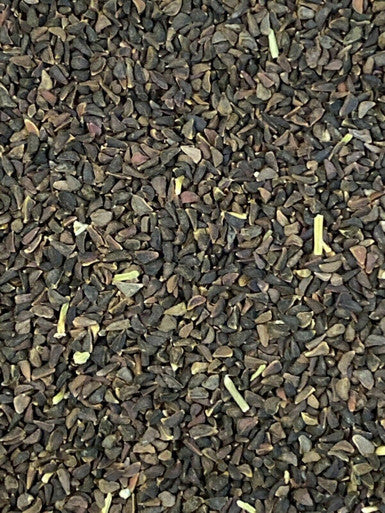
Harmal — Peganum harmala Seeds (Esfand / Wild Rue / Aspand)
Harmal — Peganum harmala Seeds (Esfand / Wild Rue / Aspand)
Couldn't load pickup availability
Harmal — Peganum harmala Seeds (Esfand / Wild Rue / Aspand)
Traditional Unani & Ethnobotanical Herb | Antimicrobial | Neuroprotective | Antioxidant
Harmal (Peganum harmala), known across the Middle East, Central Asia, and South Asia as Esfand, Aspand, or Harmel, is one of the most pharmacologically rich plants in traditional medicine. Used for over two millennia in Unani, Persian, and North African healing systems, its seeds contain a dense concentration of β-carboline alkaloids — principally harmine, harmaline, and harmalol — alongside quinazoline alkaloids (vasicine, vasicinone) and flavonoids. Modern phytochemical research has validated many of its traditional applications, positioning it as a significant subject of contemporary pharmacological investigation.
Available in 50g and 100g.
Active Constituents
- Harmine — A β-carboline alkaloid and reversible MAO-A inhibitor. Exhibits neuroprotective, antidepressant, antifungal, and antiproliferative properties. Crosses the blood-brain barrier.
- Harmaline — A dihydro-β-carboline alkaloid with potent MAO-A inhibitory and tremor-suppressing activity. Studied for its role in cerebellar function and neurological modulation.
- Harmalol — A hydroxylated β-carboline with antioxidant and DNA-intercalating properties. Contributes to the plant’s antimicrobial and anticancer activity.
- Vasicine & Vasicinone — Quinazoline alkaloids with bronchodilatory and uterotonic activity.
- Peganine — An alkaloid with antiparasitic and antileishmanial properties.
- Flavonoids & Tannins — Contribute to antioxidant capacity and anti-inflammatory activity.
Benefits & Clinical Research
1. Antimicrobial & Antifungal Activity
Peganum harmala seed extracts have demonstrated broad-spectrum antimicrobial activity in multiple in vitro studies. Research published in the Journal of Ethnopharmacology (Nenaah, 2010) documented significant inhibitory activity against Staphylococcus aureus, Escherichia coli, Candida albicans, and Aspergillus niger, attributing activity primarily to harmine and harmaline. A further study in Asian Pacific Journal of Tropical Medicine (Herraiz et al., 2010) confirmed harmine’s potent antifungal mechanism via disruption of fungal cell membrane integrity.
2. MAO-A Inhibition & Antidepressant Effects
Harmine and harmaline are well-characterised reversible inhibitors of monoamine oxidase A (MAO-A), the enzyme responsible for serotonin and noradrenaline catabolism. A landmark study in Planta Medica (Herraiz & Chaparro, 2006) demonstrated harmine’s IC₅₀ for MAO-A inhibition at nanomolar concentrations, comparable to pharmaceutical antidepressants. This mechanism underpins the traditional use of harmal in mood disorders and anxiety. Note: Due to MAO-A inhibition, concurrent use with serotonergic medications is contraindicated.
3. Anti-inflammatory Properties
Ethanolic extracts of Peganum harmala seeds have shown significant inhibition of pro-inflammatory cytokines (TNF-α, IL-6, IL-1β) in macrophage models. A study published in Pharmaceutical Biology (Moloudizargari et al., 2013) provided a comprehensive review of the plant’s anti-inflammatory mechanisms, including COX-2 inhibition and NF-κB pathway suppression, supporting its traditional use in arthritic and inflammatory conditions.
4. Antioxidant Activity
The β-carboline alkaloids and flavonoid fraction of P. harmala exhibit potent free-radical scavenging activity. A study in the African Journal of Biotechnology (Berrougui et al., 2006) measured DPPH radical scavenging activity of harmal seed extracts, finding activity comparable to standard antioxidants such as BHT. Harmalol in particular demonstrated strong DNA-protective antioxidant capacity in oxidative stress models.
5. Antiparasitic & Antileishmanial Properties
Peganum harmala has a well-documented ethnobotanical history as an antiparasitic agent. Modern research has validated this: a study in Parasitology Research (Farouk et al., 2014) confirmed significant antileishmanial activity of harmine and peganine against Leishmania donovani promastigotes. Additional studies have documented activity against intestinal helminths and Giardia species, supporting its traditional use as a vermifuge.
6. Neuroprotective Effects
Harmine has attracted significant interest as a potential neuroprotective and neuroregenerative agent. A study published in Neuropharmacology (Dakic et al., 2016) demonstrated that harmine stimulates neurogenesis in human neural progenitor cells, with implications for neurodegenerative conditions including Parkinson’s disease and depression. Harmaline has been studied for its modulation of cerebellar Purkinje cell activity, relevant to essential tremor research.
7. Anticancer & Antiproliferative Potential
Preliminary in vitro and in vivo research has identified significant antiproliferative activity of harmine and harmalol against multiple cancer cell lines. A study in Cancer Letters (Hamsa & Kuttan, 2011) demonstrated harmine-induced apoptosis in Ehrlich ascites carcinoma cells via caspase-3 activation and cell cycle arrest at G2/M phase. A further review in Phytomedicine (Lamchouri et al., 2013) summarised cytotoxic activity across breast, lung, and colon cancer cell lines. These findings are preliminary and do not constitute clinical evidence of anticancer efficacy in humans.
8. Traditional & Ritual Uses
Across Persian, Afghan, Pakistani, and North African cultures, harmal seeds are burned as incense (Esfand or Aspand) in protective and purification rituals, particularly to guard against the “evil eye” (Nazar). The aromatic smoke contains volatile β-carboline compounds. This practice remains widespread and culturally significant across diaspora communities in the UK.
Traditional Uses in Unani & Ethnomedicine
- Antimicrobial wash for skin infections and wounds
- Fumigation for respiratory complaints and environmental purification
- Analgesic for headaches, joint pain, and toothache
- Antiparasitic for intestinal worm infestations
- Mood support and nervous system tonic
- Ritual fumigation (Esfand/Aspand burning)
Precautions & Safety
- Toxicity: High doses are toxic and may cause hallucinations, nausea, vomiting, bradycardia, and tremors. Use only in recommended traditional quantities.
- Pregnancy: Contraindicated. Contains vasicine and vasicinone with documented uterotonic and potential abortifacient activity.
- Drug Interactions: MAO-A inhibitory activity contraindicates concurrent use with SSRIs, SNRIs, tricyclic antidepressants, tramadol, or tyramine-rich foods.
- Not for internal use without guidance from a qualified Unani or herbal medicine practitioner.
- Keep out of reach of children. Store in a cool, dry place away from direct sunlight.
Sold as a traditional botanical herb for ethnobotanical, aromatic, and research purposes. These statements have not been evaluated by the MHRA. This product is not intended to diagnose, treat, cure, or prevent any disease. Always consult a qualified healthcare professional before internal use.
Share