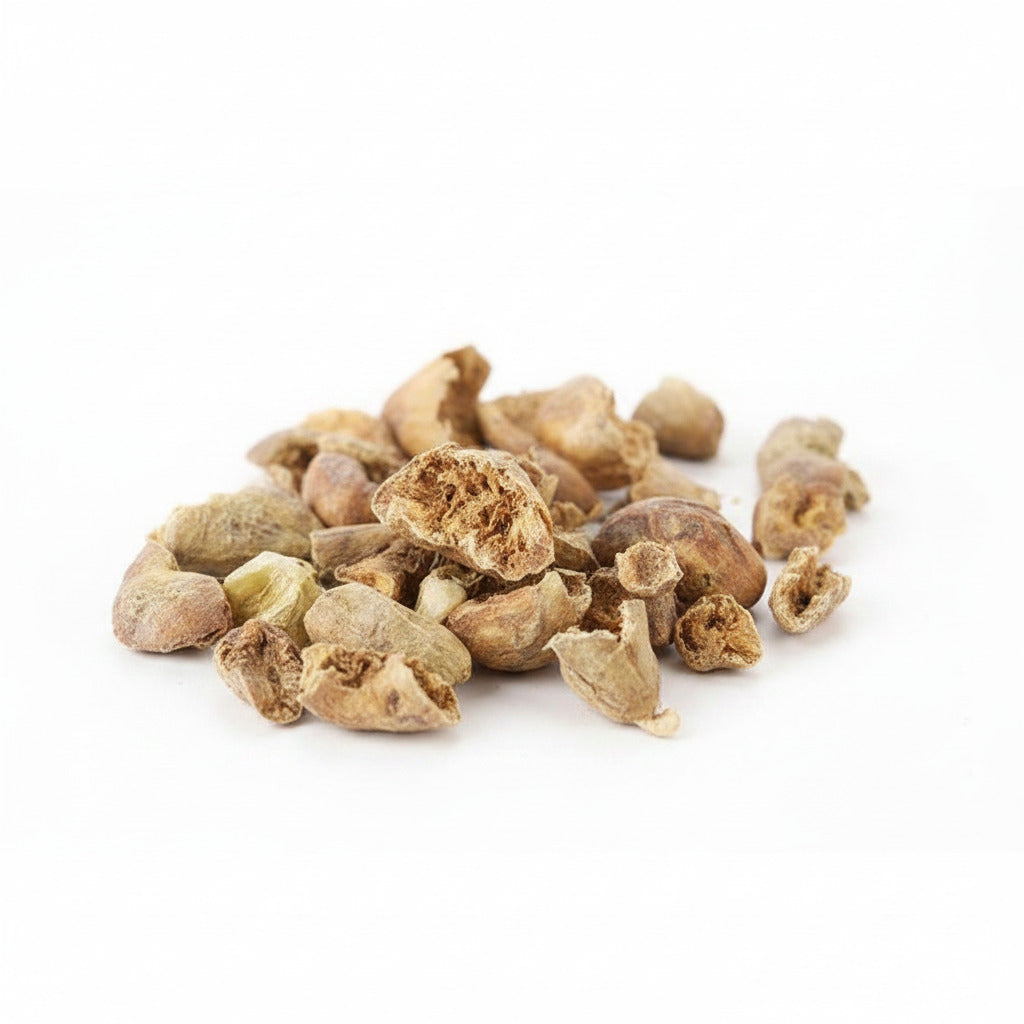
Harad Chhal (Haritaki Rind) – Premium Ayurvedic Herb
Harad Chhal (Haritaki Rind) – Premium Ayurvedic Herb
Couldn't load pickup availability
Harad Chhal – The King of Herbs in Ayurvedic Tradition
Harad Chhal, the dried rind of Terminalia chebula (Haritaki), is one of the most revered botanicals in Ayurvedic medicine. Known as the "King of Medicines" in Tibetan and Indian healing traditions, this sun-dried fruit rind carries a complex, earthy bitterness that signals its remarkable concentration of bioactive compounds. Each batch is carefully sourced and dried to preserve the full spectrum of tannins, polyphenols, and triterpenoids that make Haritaki so therapeutically significant.
- 100% natural, sun-dried Haritaki rind
- Rich in chebulinic acid, chebulagic acid & gallic acid
- Traditionally used in Triphala formulations
- Suitable for decoctions, powders & herbal preparations
- 50g resealable pack — ideal for home Ayurvedic practice
Key Compounds & Clinical Benefits
Harad Chhal's therapeutic profile is underpinned by a dense matrix of polyphenolic compounds with well-documented biological activity:
- Chebulinic Acid & Chebulagic Acid (Ellagitannins) — These signature tannins exhibit potent antioxidant, anti-inflammatory, and antimicrobial properties. A study published in Phytomedicine (2010) demonstrated that chebulagic acid inhibits NF-κB signalling pathways, reducing pro-inflammatory cytokine production — a key mechanism in chronic inflammatory conditions.
- Gallic Acid — A phenolic acid with extensively documented hepatoprotective and antioxidant activity. Research in the Journal of Ethnopharmacology (2011) confirmed gallic acid's ability to neutralise reactive oxygen species (ROS) and protect hepatocytes from oxidative damage, supporting liver health and detoxification.
- Corilagin & Terchebin (Hydrolysable Tannins) — Shown in peer-reviewed studies to exhibit antiviral and antibacterial activity. A 2015 study in BMC Complementary and Alternative Medicine identified Terminalia chebula extracts as effective against a broad spectrum of gram-positive and gram-negative bacteria, including antibiotic-resistant strains.
- Triterpenoids (Arjungenin, Terminolic Acid) — These compounds contribute to Haritaki's traditional use in supporting digestive motility and gut health. Clinical research published in Ancient Science of Life supports its use as a mild laxative and prebiotic, promoting beneficial gut flora balance.
- Vitamin C & Flavonoids — Contribute to immune modulation and collagen synthesis support, reinforcing Haritaki's role in Rasayana (rejuvenative) Ayurvedic therapy.
Traditional Uses
In classical Ayurveda, Haritaki is classified as a Tridoshic herb — balancing Vata, Pitta, and Kapha doshas. It is a core component of Triphala, one of the most widely studied Ayurvedic formulations globally. Traditionally prepared as a decoction (kwath), it has been used to support digestive health, respiratory function, and cognitive clarity.
How to Use
Simmer 5–10g of Harad Chhal in 300ml of water for 15–20 minutes to prepare a traditional decoction. Strain and consume warm. Alternatively, grind into a fine powder for use in herbal blends or capsule formulations. Consult a qualified Ayurvedic practitioner for personalised guidance.
Share