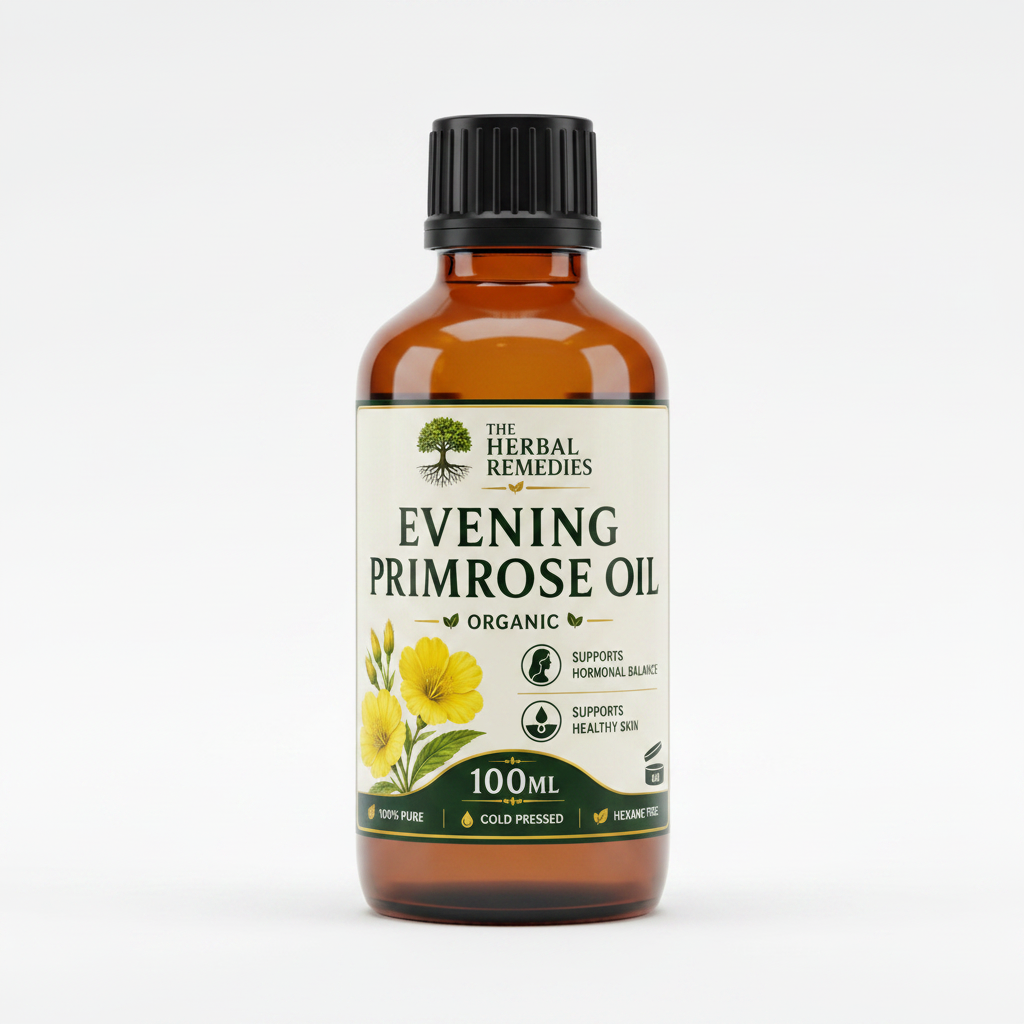
Evening Primrose Oil — Cold-Pressed | Clinical Series
Evening Primrose Oil — Cold-Pressed | Clinical Series
Couldn't load pickup availability
Evening Primrose Oil — Cold-Pressed, Pure & Unrefined
Extracted from the seeds of Oenothera biennis, Evening Primrose Oil is one of nature’s most concentrated plant sources of gamma-linolenic acid (GLA) — an omega-6 fatty acid with a well-documented role in hormonal regulation, skin barrier integrity, and inflammatory modulation. Cold-pressed and unrefined to preserve its full bioactive fatty acid profile.
Available in 10ml, 30ml, 50ml, and 100ml.
Ingredients
- Evening Primrose Seed Oil (Oenothera biennis) — 100% pure, cold-pressed, unrefined
-
Fatty Acid Profile:
- Gamma-Linolenic Acid (GLA, ω-6): 8–10%
- Linoleic Acid (LA, ω-6): 65–80%
- Oleic Acid (ω-9): 6–11%
- Palmitic Acid: 5–8%
- Stearic Acid: 1–3%
- Natural Vitamin E (Tocopherols) — present as a natural antioxidant stabiliser
Free from: hexane solvents, synthetic preservatives, parabens, mineral oils, and artificial fragrance. Suitable for vegans.
Benefits & Clinical Research
1. Skin Health, Barrier Function & Atopic Dermatitis
GLA is a direct precursor to prostaglandin E1 (PGE1), a lipid mediator that governs transepidermal water loss (TEWL) and epidermal inflammatory signalling. Deficiency in GLA metabolism is mechanistically linked to compromised skin barrier function and atopic conditions.
- Atopic Dermatitis: A randomised controlled trial (British Journal of Dermatology, Senapati et al., 2008) found oral EPO supplementation significantly reduced SCORAD indices vs. placebo over 5 months. A Cochrane-adjacent systematic review (Journal of Dermatological Treatment, Bamford et al., 2013) reviewed 26 RCTs of oral EPO and borage oil in eczema, confirming meaningful symptom reduction in a subset of patients.
- Skin Ageing, Elasticity & Moisture: A double-blind, placebo-controlled study (International Journal of Cosmetic Science, Muggli, 2005) demonstrated that dietary GLA supplementation improved skin moisture, elasticity, firmness, and fatigue resistance in women aged 25–50 after 12 weeks of supplementation.
- Acne & Sebum Normalisation: Research in Lipids in Health and Disease (Lim et al., 2014) identified linoleic acid deficiency in sebum as a primary driver of comedone formation; topical application of LA-rich oils such as EPO may help normalise sebum lipid composition and reduce follicular occlusion.
- Wound Healing: A 2021 study in Skin Pharmacology and Physiology found that topical GLA-rich oils accelerated epidermal regeneration and reduced inflammatory cytokine expression (IL-1β, TNF-α) in ex vivo skin models.
2. Hormonal Balance, PMS & Menstrual Health
GLA supports the biosynthesis of anti-inflammatory prostaglandins (PGE1 series) via the DGLA pathway, which plays a regulatory role in the hormonal cascade governing the menstrual cycle and breast tissue sensitivity.
- Cyclical Mastalgia (Breast Pain): A landmark RCT published in The Lancet (Pye et al., 1985) found EPO to be as effective as bromocriptine and danazol for cyclical mastalgia, with a markedly superior side-effect profile. A subsequent meta-analysis (European Journal of Obstetrics & Gynecology and Reproductive Biology, Blommers et al., 2002) confirmed EPO’s efficacy for cyclical breast pain across multiple trials.
- PMS Symptom Reduction: A systematic review of seven placebo-controlled trials (Journal of Reproductive Medicine, Budeiri et al., 1996) found EPO produced meaningful reductions in overall PMS symptom scores, particularly mood-related and physical symptoms including bloating and irritability.
- Dysmenorrhoea: A 2018 RCT in the Journal of Obstetrics and Gynaecology Research (Rahbar et al.) found that EPO supplementation significantly reduced the severity and duration of primary dysmenorrhoea compared to placebo (p<0.01), attributed to prostaglandin E1-mediated uterine muscle relaxation.
3. Menopausal Symptom Relief
- Hot Flushes: A double-blind RCT (Archives of Gynecology and Obstetrics, Farzaneh et al., 2013) found 500mg EPO twice daily for 6 weeks significantly reduced the frequency, severity, and duration of hot flushes in menopausal women vs. placebo (p<0.05).
- Vaginal Atrophy & Dryness: A clinical study (Iranian Journal of Nursing and Midwifery Research, Abedi et al., 2020) found topical EPO application improved vaginal pH, moisture, and elasticity scores in postmenopausal women over 4 weeks, offering a non-hormonal alternative for genitourinary symptoms.
- Bone Density: Emerging research (Prostaglandins, Leukotrienes and Essential Fatty Acids, Kruger et al., 2010) suggests GLA combined with EPA may attenuate bone loss in postmenopausal women by modulating osteoclast activity via prostaglandin pathways.
4. Anti-Inflammatory & Rheumatological Support
GLA is metabolised to dihomo-gamma-linolenic acid (DGLA), which competes with arachidonic acid for cyclooxygenase (COX) and lipoxygenase (LOX) enzymes, thereby reducing synthesis of pro-inflammatory eicosanoids including PGE2 and LTB4.
- Rheumatoid Arthritis: A double-blind RCT (Arthritis & Rheumatism, Zurier et al., 1996) demonstrated that 2.8g/day GLA from EPO produced statistically significant reductions in joint tenderness, swelling, and morning stiffness after 6 months — 16 of 21 patients in the GLA group showed clinically meaningful improvement vs. 4 of 19 in the placebo group.
- Systemic Inflammation Markers: A 2019 review in Nutrients (Kapoor & Huang) confirmed that GLA supplementation consistently reduces serum CRP and IL-6 in populations with chronic low-grade inflammation, with effects comparable to fish oil at equivalent doses.
- Inflammatory Bowel Disease: Preliminary research (Gut, Greenfield et al., 1993) suggested EPO supplementation may help maintain remission in ulcerative colitis by modulating mucosal prostaglandin profiles and reducing leukotriene B4 production.
5. Diabetic Peripheral Neuropathy & Nerve Health
- Nerve Conduction & Sensory Thresholds: A multicentre RCT (Diabetes Care, Keen et al., 1993) found 480mg/day GLA from EPO over 12 months produced significant improvements in 13 of 16 neurophysiological parameters in patients with mild diabetic neuropathy, including nerve conduction velocity, thermal thresholds, and vibration perception.
- Mechanism: GLA’s role in maintaining neuronal membrane fluidity and reducing endoneurial ischaemia via PGE1-mediated vasodilation is proposed as the primary mechanism of action (Prostaglandins, Leukotrienes and Essential Fatty Acids, Cameron & Cotter, 1994).
6. Cardiovascular & Lipid Profile Support
- Blood Pressure: A meta-analysis of 17 RCTs (Journal of Hypertension, Minihane et al., 2016) found omega-6 GLA supplementation associated with modest but significant reductions in systolic blood pressure in hypertensive individuals.
- Platelet Aggregation: GLA-derived DGLA inhibits thromboxane A2 synthesis, reducing platelet aggregation and supporting healthy blood viscosity (Thrombosis Research, Kernoff et al., 1977).
How to Use
Topical (Skin & Hair): Apply 3–5 drops to cleansed skin morning and/or evening. Massage gently until absorbed. Suitable for face, neck, décolletage, and body. May be blended with a carrier oil or added to your existing moisturiser or serum. For scalp use, massage in and leave 20–30 minutes before washing.
Oral Supplementation: Typical clinically studied doses range from 500mg to 3,000mg per day. Consult a qualified healthcare practitioner before internal use, particularly if pregnant, breastfeeding, or taking anticoagulant medication.
Storage
Store in a cool, dark place away from direct sunlight and heat. Refrigerate after opening. Best used within 12 months of opening. Natural Vitamin E content supports oxidative stability.
Disclaimer: This product is intended for cosmetic and nutritional use. Clinical references are provided for educational purposes only. This product is not intended to diagnose, treat, cure, or prevent any disease. Always consult a qualified healthcare professional before use if pregnant, breastfeeding, or taking medication.
Share